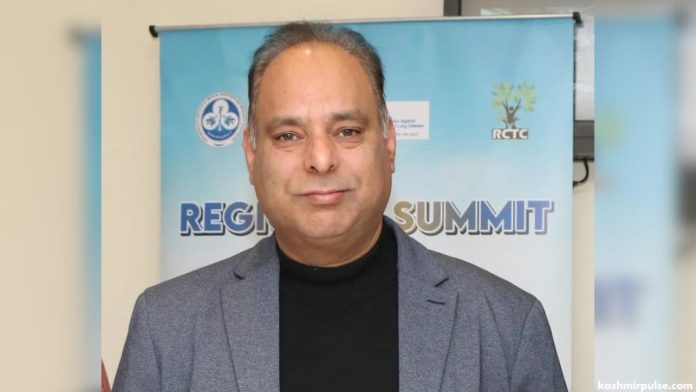
In recognition of his outstanding contributions to tobacco control in the Kashmir Division, Dr. Mir Mushtaq, the Nodal Officer for the National Tobacco Control Program (NTCP) and spokesman for the Directorate of Health Services Kashmir (DHSK), received the esteemed World Health Organization (WHO) Award on May 28. This award is especially noteworthy because it makes Dr. Mushtaq the first medical professional from Jammu and Kashmir’s Union Territory to be given this kind of recognition. This honor highlights his unrelenting dedication to public health and community well-being, as well as his powerful and relentless work in reducing tobacco use.
In a formal statement, the Directorate of Health Services Kashmir hailed the award as a reflection of Dr. Mushtaq’s dedication and hard work. It was underlined that the award represents the DHSK’s larger dedication to enhancing public health outcomes in the area in addition to honoring Dr. Mushtaq’s particular accomplishments. On May 31, World No Tobacco Day, this esteemed prize will be presented in New Delhi on the eve of the holiday. This timing is especially significant since it highlights the international commitment to lowering tobacco use and the health hazards that go along with it.
Prominent health figures have congratulated Dr. Mushtaq Ahmad Rather, the Director of Health Services Kashmir; Nazim Zai Khan, the Mission Director of the National Health Mission (NHM); and Dr. Syed Abid Rashid Shah, the Secretary of Health and Medical Education. They underlined how the Union Territory of Jammu and Kashmir feels greatly proud and recognized as a result of this honor. Their words convey a feeling of accomplishment and approval for the coordinated efforts being made in the area to reduce tobacco use.
Dr. Mir Mushtaq responded to this incredible accomplishment by expressing his deep satisfaction and describing the prize as a source of great pride. He expressed his sincere gratitude to the National Health Mission’s Mission Director, the Director of Health Services, and the Secretary of Health and Medical Education for their continuous support and advice, which he recognized as being essential to his achievement. Additionally, Dr. Mushtaq expressed his gratitude to his hardworking staff at the DHSK Tobacco Control Cell. He commended them for their dedication, hard work, and teamwork, all of which have contributed significantly to the region’s tobacco control programs’ success.
In addition, Dr. Mushtaq thanked the World Health Organization for acknowledging his efforts to reduce tobacco use. He said that the achievement in tobacco control in Kashmir is marked by this award, which also acts as motivation for further efforts to create a healthy, tobacco-free future for the area. In his remark, he emphasizes the award’s wider significance, viewing it as a source of inspiration and hope for continuing public health initiatives as well as a personal honor.
Dr. Mushtaq’s work is being recognized at a time when tobacco control is a top global public health issue. Since tobacco smoking is one of the main preventable causes of disease and death, efforts to lower its prevalence are essential to enhancing the health of the general public. Tobacco smoking presents serious health hazards in Kashmir, as it does in many other places. It is linked to a number of chronic illnesses, such as cancer, heart disease, and respiratory disorders. Thus, the work being done at the Tobacco Control Cell by Dr. Mushtaq and his colleagues is crucial.
Under his direction, the National Tobacco Control Program has tackled many facets of tobacco control through a multimodal strategy. This involves lobbying for stricter tobacco control laws, running public education programs to highlight the risks associated with tobacco use, and helping people give up smoking. Collaborations with a range of stakeholders, including as governmental and non-governmental organizations, healthcare providers, and community groups, have also been a part of the Tobacco Control Cell’s activity.
Launching public education programs has been one of the main tactics in the fight against tobacco. These initiatives aim to raise public awareness of the dangers smoking poses to one’s health and to encourage people to lead smoke-free lives. These advertisements are more successful in reaching and connecting with the local populace in Kashmir because they are specifically designed to target the unique cultural and social settings of the area.
Stronger tobacco control policy advocacy has been a vital component of the tobacco control initiatives. This involves advocating for the enactment and upholding of laws and rules that limit tobacco sponsorship, advertising, and promotion as well as those that create smoke-free zones in public areas. These legislative actions are necessary to lessen the accessibility and availability of tobacco products and to shield nonsmokers from the damaging effects of secondhand smoke.
Another important component of tobacco control initiatives is assistance for people who are attempting to give up smoking. To help people kick their tobacco addiction, the Tobacco Control Cell offers a variety of tools and support services, such as counseling and cessation programs. These programs are essential for addressing the difficulties people encounter when attempting to quit and for supporting them in maintaining a tobacco-free lifestyle.
In addition to being a personal distinction, Dr. Mushtaq’s work being acknowledged by the WHO also validates the larger tobacco reduction initiatives in Kashmir. It emphasizes how critical it is to make consistent, well-coordinated efforts to address the problems with tobacco use’s effects on public health. The honor serves as a reminder of both the tremendous advancements made thus far and the continued efforts required to bring about a tobacco-free future.
The community’s support and acknowledgment, as well as that of important health leaders, demonstrate our shared dedication to this cause. The Secretary of Health and Medical Education, the Director of Health Services Kashmir, and the Mission Director of the National Health Mission have all sent congratulations, highlighting the significance of eadership and collaboration in achieving public health goals. Their support has been crucial in advancing the tobacco control agenda in the region.
SOURCE:
MEDICAL DIALOGUES