Edible insects—including caterpillars, termites, crickets, beetles, and numerous other taxa—have long been incorporated into traditional diets across regions of Africa, Asia, and Latin America. In recent years, growing interest from nutrition science and food-security research has highlighted insects as promising alternative protein sources due to their high nutrient density, efficient feed conversion, and comparatively low environmental impact.
Global biodiversity assessments estimate that approximately 2,200–2,300 insect species are consumed as food in 128 countries, with the greatest diversity reported in Asia, followed by Mexico and parts of Central and Sub-Saharan Africa¹. Current knowledge of insect nutritional value is primarily derived from compositional analyses and short-term studies, as long-term human dietary intervention data remain limited. In the context of climate change, population growth, and finite natural resources, edible insects are increasingly recognized as scalable and sustainable ingredients for both human and animal diets.
Definition and forms of edible insects
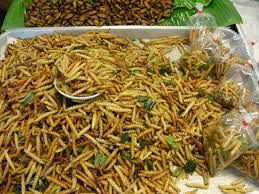
Commonly consumed edible insects include crickets (Acheta domesticus), mealworms (Tenebrio molitor), grasshoppers, beetle larvae, ants, termites, and silkworm pupae. These insects may be eaten whole after roasting, boiling, or frying, or processed into flours, pastes, and oils for incorporation into foods such as bread, pasta, snack products, and protein bars.
In Western food systems, insect-based ingredients are often integrated into familiar food formats to reduce consumer resistance while enhancing protein and micronutrient content, aligning with broader nutrition and sustainability objectives².
Macronutrients and protein quality
Edible insects typically contain 35–75% crude protein on a dry-weight basis²⁻⁴, providing all essential amino acids. Protein digestibility is generally comparable to that of milk, soy, and casein, though values vary depending on species, developmental stage, and processing conditions².
Lipids constitute approximately 10–50% of dry matter and are largely unsaturated, often representing 57–75% of total fatty acids. Dietary fiber is also present, primarily in the form of chitin from the exoskeleton⁴, contributing to insects’ classification as nutrient-dense foods².
Micronutrients
Insects are rich sources of iron, zinc, calcium, vitamin B12, riboflavin, and thiamine. Reported iron and zinc concentrations commonly range from 5–60 mg/100 g and 8–27 mg/100 g dry weight, respectively²⁻⁴, often matching or exceeding levels found in conventional livestock and legumes.
Digestibility, lipids, and fiber
Insect proteins demonstrate high biological value when antinutritional factors are minimized through processing². Protein extraction methods such as alkaline/isoelectric precipitation and ultrasound-assisted techniques enhance yield while maintaining amino acid composition, though functional and allergenic properties may be altered.
Lipid profiles vary by species and life stage, with linoleic and α-linolenic acids commonly present. Chitin and its derivative chitosan may exert prebiotic effects and influence gut microbiota composition, though digestibility depends on processing and particle size⁴.
Sustainability and safety
Edible insects require fewer land, water, and feed resources than conventional livestock and can be reared on organic byproducts, supporting circular food systems. However, only about 6% of edible insect species are currently farmed at scale, with most still harvested from the wild¹.
While generally safe when properly produced, edible insects may pose allergenic risks, particularly for individuals with shellfish allergies due to cross-reactive proteins such as tropomyosin. Food safety concerns related to microbial contamination and heavy metal accumulation depend on rearing and processing practices⁴. Further long-term studies are needed to evaluate chronic health effects and species-specific variability