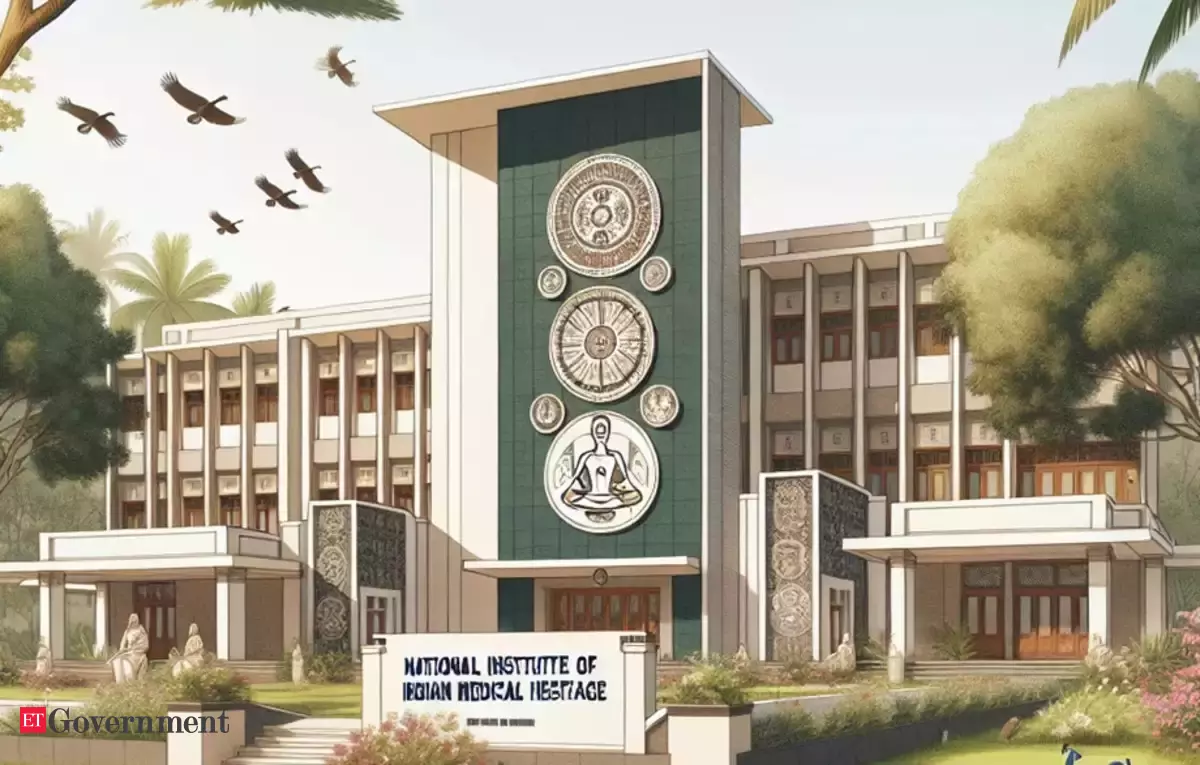
The National Institute of Indian Medical Heritage (NIIMH) in Hyderabad was recently named a WHO Collaborating Center (CC) for “Fundamental and Literary Research in Traditional Medicine” by the World Health Organization (WHO). This esteemed accolade, bestowed for a four-year duration commencing on June 3, signifies a noteworthy accomplishment for the establishment and mirrors its committed endeavors in the domains of customary medicine and historical inquiry.
Under the Ministry of Ayush, the Central Council for Research in Ayurvedic Sciences (CCRAS) oversees NIIMH as one of its units. NIIMH is a unique institution that was founded in 1956 with the goal of preserving and presenting research on medico-historical topics related to various Indian traditional medical systems, such as Ayurveda, Yoga, Naturopathy, Unani, Siddha, Sowa-Rigpa, Homoeopathy, and other related healthcare fields.
With persistent hard work and dedication, NIIMH has been recognized, led by Vaidya Rabinarayan Acharya, the Director General of CCRAS and Head of the WHO-CC. Professor Acharya highlighted that the WHO’s recognition is a testament to the institute’s unwavering work in the fields of traditional medicine and historical research.
The AYUSH Manuscripts Advanced Repository (AMAR) portal, which catalogs a sizable collection of Ayush manuscripts, is one of the noteworthy projects run by NIIMH. 16,000 Ayush manuscripts, including 4,249 digitized manuscripts, 1,224 rare volumes, 14,126 catalogues, and 4,114 periodicals are available in the repository. This project demonstrates the institute’s dedication to using digital platforms to preserve and advance conventional medical knowledge.
NIIMH has created the Showcase of Ayurvedic Historical Imprints (SAHI) online, which showcases 793 medico-historical artifacts, in addition to the AMAR portal. Through the e-Books of Ayush project, the institute also makes classical texts available in digital format. In addition, the Ayush Research Portal indexes 42,818 published Ayush research publications, and the National Ayush Morbidity and Standardized Terminologies Electronic (NAMASTE) portal gathers cumulative morbidity statistics from 168 institutions.
In addition to having a Medical Heritage Museum and Library with rare books and manuscripts from the fifteenth century AD, the NIIMH is home to over five hundred physical manuscripts. The institute’s significance in conserving the historical legacy of traditional medicine in India is highlighted by this impressive collection. Furthermore, NIIMH disseminates knowledge in this subject and conducts scholarly study through the Journal of Indian Medical Heritage.
There are over 58 WHO Collaborating Centers in India that specialize in different areas of related and biomedical sciences. Along with the Institute for Teaching and Research in Ayurveda, Jamnagar, and the Morarji Desai National Institute of Yoga (MDNIY), New Delhi, NIIMH becomes the third WHO Collaborating Center in the field of traditional medicine. This recognition emphasizes how important NIIMH is to the global advancement of traditional medicine research and practices.
NIIMH has a number of important duties as the first WHO Collaborating Center for “Fundamental and Literary Research in Traditional Medicine.” Helping the WHO standardize terminology for ancient medicinal systems like Ayurveda, Unani, Siddha, and Sowa-Rigpa is one of its main responsibilities. Furthermore, NIIMH will assist in revising the Traditional Medicine Module-II for the International Classification of Diseases, Eleventh Edition (ICD-11).
Additionally, member states will receive assistance from the WHO Collaborating Center in creating research protocols for traditional medicine. This entails offering direction and knowledge to improve the standardization of research procedures and scientific rigor in conventional medical systems. Through this approach, NIIMH hopes to promote more recognition and incorporation of traditional medicine into international mainstream healthcare systems.
The WHO’s designation of NIIMH as a Collaborating Center highlights the expanding role of traditional medicine in the international healthcare system. With their natural and holistic approaches to health and well-being, traditional medical systems have long been an essential component of healthcare in many cultures. To guarantee that traditional medical knowledge is kept current and applicable in the context of contemporary healthcare, organizations such as NIIMH play a critical role in its documentation, advancement, and preservation.
To sum up, NIIMH’s recognition as a WHO Collaborating Center for “Fundamental and Literary Research in Traditional Medicine” is evidence of the organization’s steadfast dedication to this area of study and its noteworthy advancements. In addition to showcasing NIIMH’s accomplishments, this recognition upholds the organization’s worldwide significance and importance of traditional medicine in enhancing healthcare and promoting holistic well-being.
SOURCE:
THE PRINT