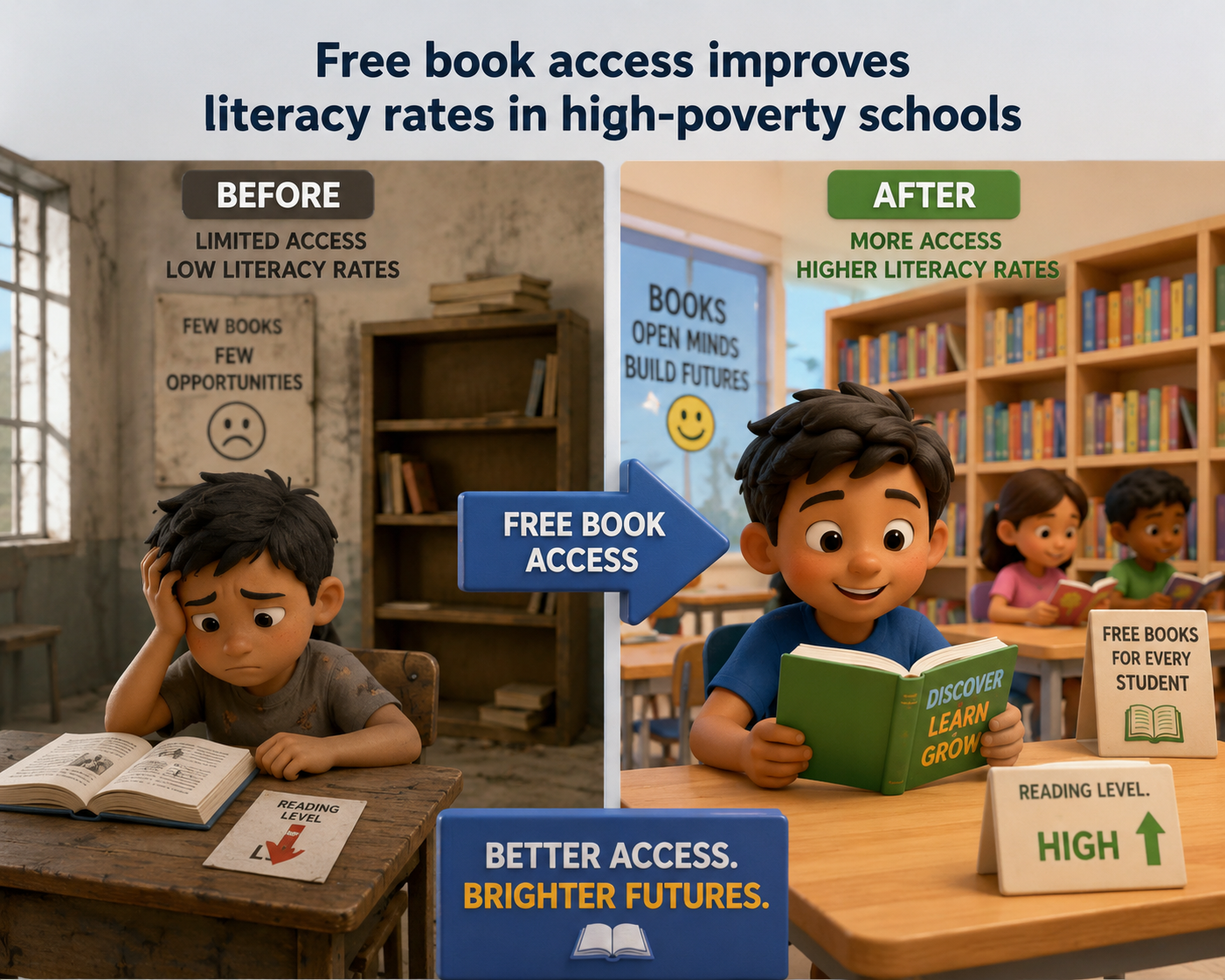
A recent study highlights that providing children with free access to books can significantly improve literacy rates in high-poverty schools. Researchers found that students who regularly received engaging and age-appropriate books showed better reading performance over time compared to students who did not receive free books. The study emphasized that access to reading materials plays a major role in developing literacy skills, especially for children from low-income families who may not have books available at home.
The research was conducted over five years in several high-poverty elementary schools. During the program, students were given high-quality books without any pressure, rewards, or monitoring to ensure they read them. Despite this, students who had continuous access to books demonstrated noticeable improvement in reading achievement. Experts believe that having books at home encourages children to read more often, strengthens vocabulary, improves comprehension, and creates a positive reading culture within families.
Another important finding of the study was that the long-term availability of books produced stronger academic results than short-term interventions. Students who received books consistently over multiple years gained reading skills equivalent to several additional months of learning. The program was also highly affordable, making it a practical solution for schools and communities looking to improve education outcomes at a low cost.
Researchers further explained that free books can increase students’ confidence, motivation, and interest in learning. Children are more likely to connect with stories that reflect their own experiences and cultures, which helps build a stronger sense of identity and belonging. Overall, the study proves that expanding access to books is a simple yet effective strategy for improving literacy and supporting academic success in underprivileged schools and communities.