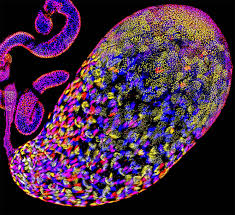
A recent study led by the University of Utah has uncovered the biological mechanism behind a long-standing evolutionary puzzle: how “selfish chromosomes” manipulate genetic inheritance to their advantage. The research shows that certain rogue chromosomes exploit the Overdrive (Ovd) gene to eliminate competing sperm cells.
Scientists discovered that the Ovd gene normally functions as a quality-control checkpoint during sperm development, identifying and removing defective sperm. However, selfish chromosomes manipulate this natural mechanism, using it to destroy rival sperm and thereby increase their own chances of being passed on to the next generation.
These findings help explain Segregation Distortion, a genetic phenomenon where some genes bias inheritance in their favor instead of following the usual 50/50 inheritance pattern described by Gregor Mendel’s genetic principles. Researchers observed this process in two species of fruit flies belonging to the genus Drosophila. Interestingly, both species possessed completely different selfish chromosomes, suggesting that separate evolutionary systems may independently evolve ways to exploit the same Ovd pathway.
According to Jackson Ridges, the study’s lead author and a biologist at the University of Utah, this is the first evidence showing that multiple independent selfish chromosomes rely on the same gene to eliminate competing gametes. This suggests that even genetically distant chromosomes may target similar cellular mechanisms.
The phenomenon of segregation distortion was first identified in the 1920s during studies of the fruit fly Drosophila obscura. Since then, similar patterns have been found in many organisms, including nematodes and mammals, although the exact biological processes involved have remained unclear.
While humans do not possess an identical version of this gene system, scientists believe that similar quality-control mechanisms may exist in human reproductive biology. These discoveries could eventually help researchers better understand male infertility and the development of reproductive barriers between species.
Senior author Nitin Phadnis, an associate professor at the University of Utah, explained that scientists have long been puzzled by how selfish genes contribute to sterility and species formation. Investigating the Overdrive gene unexpectedly opened new research directions related to cellular quality-control systems and how reproductive incompatibility evolves between closely related species.
The official study results were published on February 10, 2026 in the journal Nature Communications.
Nearly two decades earlier, Phadnis and his mentor H. Allen Orr first identified the Overdrive gene as a factor influencing male sterility and segregation distortion in hybrids formed between different Drosophila species. Their 2009 research showed that this gene could interfere with the development of competing sperm, helping establish the idea that segregation distorters can drive reproductive isolation between species.
In the latest experiments, the research team investigated whether the Ovd gene was necessary for sperm production. Scientists disabled the gene in two species—Drosophila pseudoobscura and Drosophila melanogaster—to study two independent selfish chromosome systems. Surprisingly, removing the gene did not affect male fertility, indicating that Ovd is not essential for producing sperm under normal conditions.
Researchers then hypothesized that the gene might function similarly to the tumor-suppressor gene p53, which normally prevents uncontrolled cell growth but only becomes active when genetic damage occurs.
To test this theory, the team exposed fruit flies to high temperatures above 31°C, a level known to cause sterility in male fruit flies. After one week in a heated incubator, normal flies became sterile, whereas flies lacking the Ovd gene continued producing offspring. This result suggested that the Overdrive gene blocks sperm development under stressful conditions to prevent the formation of unhealthy gametes.
According to Phadnis, this finding confirmed that the primary function of Overdrive is to act as a safeguard that removes defective reproductive cells. Selfish chromosomes simply exploit this system for their own advantage.
The researchers now plan to examine other species of fruit flies to determine how widespread this hijacking mechanism is and whether similar forms of segregation distortion might occur in human evolutionary lineages.