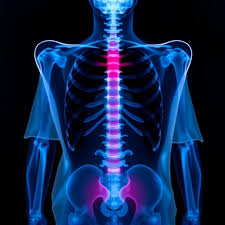
Lightweight Polymer Could Replace Lead in X-Ray Aprons
Researchers at the University of Waterloo have developed a lightweight and flexible polymer material that may replace lead in traditional X-ray protective aprons. Despite being nearly 90% lighter than conventional lead aprons, the new material offers the same level of protection against harmful X-ray radiation.
Lead aprons are commonly used to shield healthcare workers from radiation exposure. While occasional use poses little concern for patients, medical technicians who wear these heavy aprons daily often suffer from back, neck, and shoulder pain. In some cases, the physical strain can force workers to leave their profession earlier than expected.
Another major concern with lead aprons is lead dust contamination. Over time, lead particles can be released and inhaled or swallowed by workers. Since lead is toxic and can damage the nervous and cardiovascular systems, the World Health Organization states that no level of lead exposure is completely safe.
To create a safer alternative, the research team investigated several heavy metals, including bismuth, gadolinium, and barium. They eventually selected tungsten because of its high atomic density and strong ability to block X-rays.
The scientists converted tungsten into nanoparticles and incorporated them into a soft silicone-based polymer. These nanoparticles were arranged in layered gradients to maintain flexibility while maximizing radiation protection. Tests showed that rod-shaped nanoparticles were especially effective at absorbing X-rays.
The new material was evaluated through laboratory experiments and computer modeling in collaboration with specialists at Grand River Hospital in Kitchener.
Researchers are now exploring whether the technology can also be used to shield against other forms of radiation, such as gamma rays used in the nuclear energy industry. Future applications may even include protective materials that reduce exposure to electromagnetic waves emitted by everyday devices like smartphones and Wi-Fi equipment.
This innovation demonstrates that effective radiation protection can be achieved without relying on heavy, toxic lead-based materials, potentially improving safety and comfort for healthcare workers and others exposed to radiation on a regular basis.